Protective Order Violation in Texas: What You Must Know
July 27, 2026 · Law Office of Anna Din PLLC
Yes — a protective order violation in Texas is a criminal offense. Under Tex. Penal Code §25.07, law enforcement can arrest the violator, and both criminal prosecution and civil penalties may follow. If a violation is happening right now, call 911, tell the dispatcher a protective order is being violated, move to a safe location, and get a police report number before you do anything else. The PROTECT system (Texas Protective Order Registry) maintains records of active orders statewide, so officers can verify your order quickly. Once you are safe, preserve every piece of evidence — screenshots, voicemails, and any witness contact information — before reaching out to an attorney.
Table of Contents
-
What conduct actually counts as a protective order violation in Texas?
-
Criminal charges and penalties: how violations are charged and when they escalate
-
How law enforcement enforces violations: arrests, probable cause, and what to record
-
Civil enforcement and contempt: court options beyond criminal prosecution
-
How a family-law attorney can help you enforce a protective order
-
The Law Office of Anna Din is ready to help after a violation
What conduct actually counts as a protective order violation in Texas?
The order’s written terms control everything. Some orders prohibit all contact; others ban only threatening or harassing communication. Either way, conduct that crosses the order’s specific language is legally actionable under §25.07 and related statutes.
The statute lists these categories of prohibited behavior:
-
Direct communication: calling, texting, emailing, or messaging the protected person in any way the order forbids
-
Indirect threats or harassment: sending messages through a third party or posting threatening content on social media directed at the protected person
-
Approaching protected locations: going near the protected person’s home, workplace, school, or any location named in the order
-
Firearm possession: possessing a firearm while subject to certain protective orders
-
GPS tampering: disabling or interfering with a court-ordered monitoring device
-
Harming pets: injuring, threatening, or removing an animal belonging to the protected person
-
Tracking: using an app, device, or any method to monitor the protected person’s location or property without consent
What surprises many people: a single text message can constitute a violation. A social-media direct message counts. Showing up at a protected person’s workplace counts, even if you never speak to them. The statute also covers magistrate emergency protection orders and bond-condition violations, so the order does not have to be a final family-court order for §25.07 to apply.
Pro Tip: If the protected person contacts you first, responding still puts you at legal risk. Verbal forgiveness from the protected person does not suspend or cancel the order. Only a court can modify or dismiss its terms — and until that happens, the order is fully enforceable.
Criminal charges and penalties: how violations are charged and when they escalate
Texas Penal Code §25.07 sets the baseline and the enhancement triggers. Prosecutors must prove three elements: the defendant was subject to a valid protective order, knew about the order, and intentionally or knowingly committed a prohibited act.
| Charge Level | Circumstances | Possible Penalties |
|---|---|---|
| Class A Misdemeanor | First or second violation with no aggravating factors | County jail time and fines according to Texas law |
| State Jail Felony | Violation committed with a deadly weapon | State jail sentence and fines as provided by Texas law |
| Third-Degree Felony | Two or more prior §25.07 convictions; assault or stalking tied to the violation | Prison sentence and fines as prescribed by Texas statutes |
Three scenarios commonly push a charge from misdemeanor to felony. First, possessing a firearm while violating the order triggers the state jail felony enhancement. Second, committing an assault during the violation can elevate the offense to a third-degree felony. Third, two or more prior convictions under §25.07 automatically qualify the new charge for felony treatment.
Prosecutors may also pursue dual charges — filing a protective-order violation alongside a separate assault or stalking count. That means a single incident can result in multiple criminal cases running at the same time. Additionally, violations motivated by bias or prejudice may be prosecuted under Tex. Penal Code §25.071, which carries enhanced penalties after a bias finding.
How law enforcement enforces violations: arrests, probable cause, and what to record
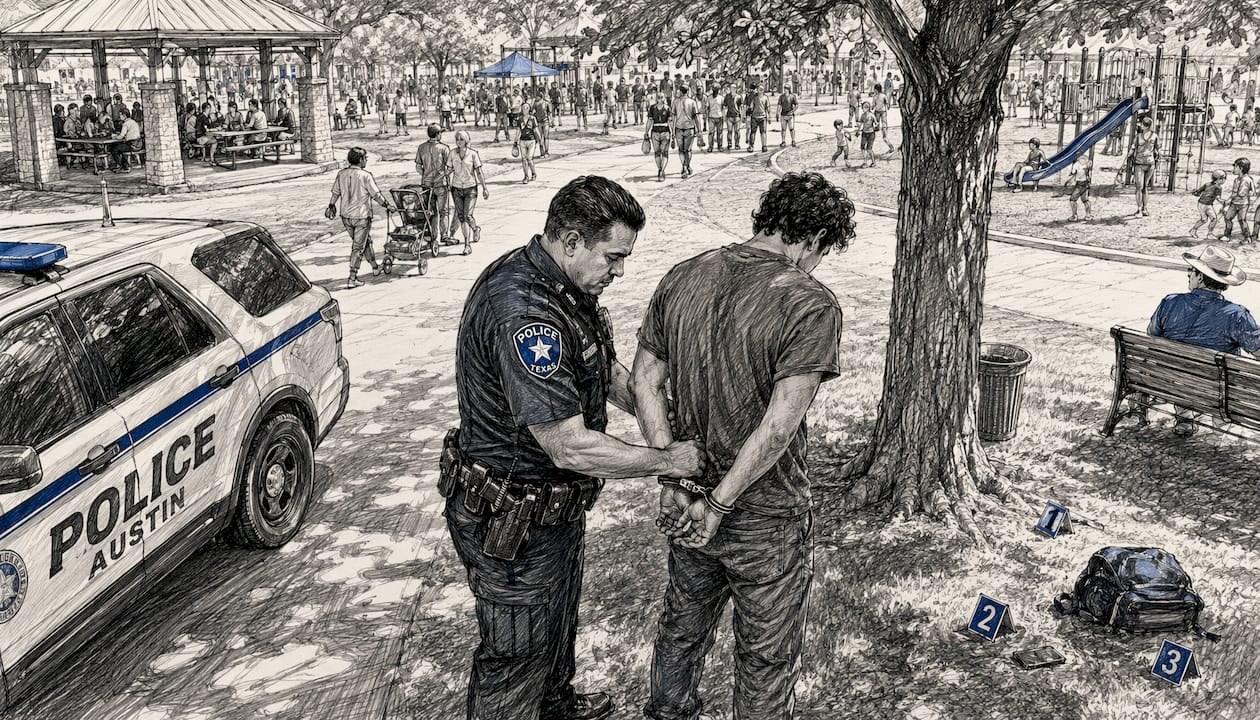
Texas law gives officers clear authority. Per Texas State Law Library guidance, officers must arrest if they personally witness a violation. They may also arrest on probable cause even when they did not witness the incident — meaning your texts, emails, photos, or a witness statement can be enough to trigger an arrest.
When officers respond, present as much of the following as you have:
-
Printed or digital copy of the protective order
-
Screenshots of messages or social-media posts with visible timestamps
-
Voicemail recordings
-
Photos of damage, proximity, or any physical evidence
-
Names and contact information of any witnesses
After officers respond, record these details before they leave:
-
Each officer’s full name and badge number
-
The incident or report number
-
Whether an arrest was made or charges are being filed
-
How to request a copy of the completed police report
Pro Tip: If officers decline to act, ask for the supervisor’s contact information on the spot and insist that a report be filed regardless. Document the officer’s name, badge number, and the reason given for not acting — that record can matter later if you need to escalate through the prosecutor’s office or the court.
Civil enforcement and contempt: court options beyond criminal prosecution
Criminal prosecution is not the only path. Courts have civil tools that can provide relief even when a criminal charge is not immediately pursued — and sometimes faster.
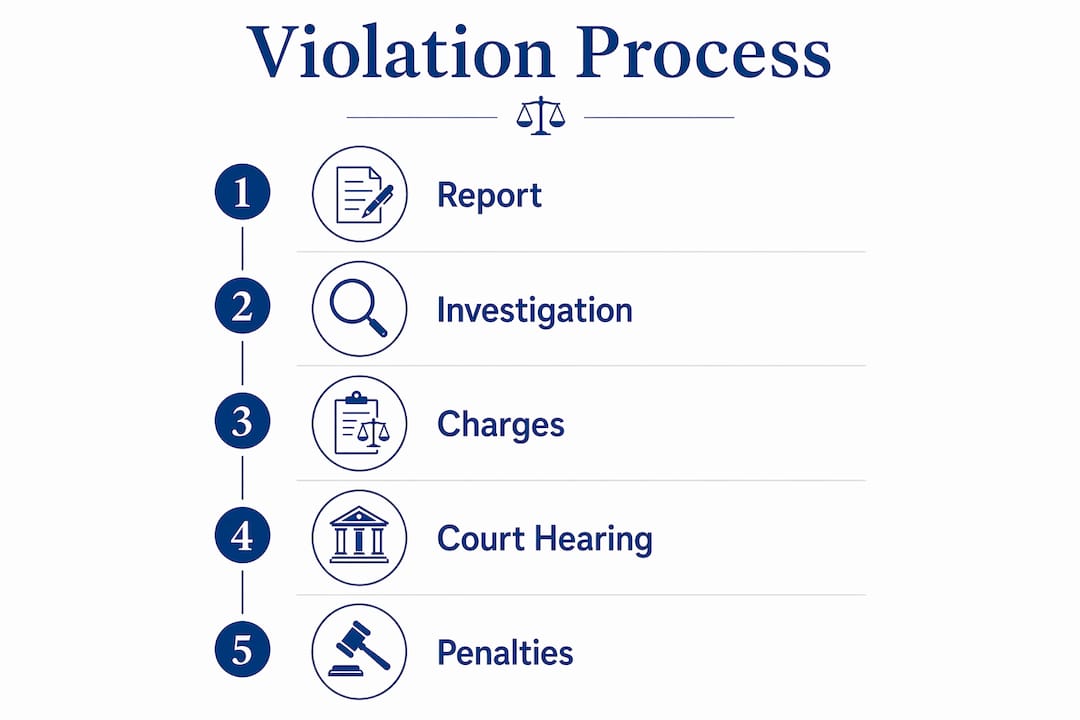
Contempt of court is the most direct civil remedy. Some protective orders state their own contempt penalties: a fine of up to $500 and up to six months in jail, separate from any criminal sentence. The protected person or their attorney files a motion for contempt, the court schedules a hearing, and the judge decides whether the violation occurred and what sanction to impose.
Beyond contempt, you can ask the court to modify, extend, or strengthen the order. Courts weigh documented patterns of noncompliance heavily when deciding whether to grant these motions. A sequence of well-documented incidents — police reports, preserved messages, a clear timeline — significantly strengthens your position.
The PROTECT registry (Texas Protective Order Registry) records active orders statewide. Law enforcement agencies can access it to confirm an order’s terms during any encounter, and the registry record supports enforcement even if you do not have a paper copy on hand.
| Enforcement Path | Who Initiates | Possible Outcome | Typical Timeline |
|---|---|---|---|
| Criminal prosecution | Prosecutor (state) | Jail, fines, felony record | Weeks to months |
| Civil contempt | Protected person or attorney | Fine up to $500, up to 6 months jail | Days to weeks (hearing required) |
| Order modification or extension | Protected person or attorney | Stronger or longer-lasting order | Days to weeks (motion and hearing) |
| Emergency protective order | Law enforcement or court | Immediate short-term protection | Same day or next day |
Step-by-step: what to do right after a violation occurs
The actions you take in the first hours after a violation often determine what enforcement options remain available to you.
Immediate steps:
-
Call 911 and state clearly that a protective order is being violated.
-
Move to a secure location before or while you call.
-
Do not alter, delete, or respond to any messages — preserve them exactly as they are.
-
Get the police report number from responding officers before they leave.
-
Write down everything you remember about the incident while it is fresh: exact time, location, what was said or done, and who witnessed it.
Evidence checklist:
-
Screenshots of texts, emails, and social-media messages that show the sender’s name and a timestamp
-
Exported copies of social-media conversations where the platform allows it
-
Voicemail recordings saved to a second device or cloud storage
-
Photos of any damage, physical proximity, or location evidence
-
Witness names, phone numbers, and a brief note of what each person observed
-
Device metadata (call logs, location data) preserved before anything is deleted
Sample log entry format:
Date/Time: June 3, 2026, 9:14 PM Incident: Received text message from [respondent’s number] stating [exact content]. Evidence preserved: Screenshot saved to phone and emailed to self at 9:17 PM. Officer contact: Officer J. Martinez, Badge #4421, Report #2026-04872.
After the immediate response, follow up with the prosecutor’s office to confirm charges are being pursued. If an arrest was not made, ask whether you can file a supporting affidavit or request a warrant. Contact the court to ask about an emergency hearing to extend or modify the order, particularly if the violation suggests escalating risk.
Pro Tip: For digital evidence, take screenshots that show the full screen including the clock and the sender’s name or number. Email those screenshots to yourself immediately so there is a server-side timestamp. If prosecution looks likely, tell your attorney early — counsel can help obtain preserved server records from carriers or platforms before they are overwritten.
How a family-law attorney can help you enforce a protective order
An attorney’s role after a violation goes well beyond paperwork. The right legal counsel can move quickly on multiple fronts at once, which matters when safety is at stake.
Services a family-law attorney provides in these situations include:
-
Advising you on immediate safety steps and what evidence to preserve in the first hours
-
Reviewing and organizing your documentation before it is submitted to police or the court
-
Filing a motion for contempt or a motion to modify or extend the order
-
Coordinating directly with the prosecutor’s office to support criminal charges
-
Requesting an emergency hearing when the situation requires fast court action
-
Representing you at contempt hearings, modification hearings, or trial
Call an attorney promptly when violations are repeated, when a weapon was involved, when an assault occurred during the violation, or when police and prosecutors are not moving as quickly as the situation demands. Protective-order violations can also affect child custody decisions — a pattern of violations on record may influence a judge’s assessment of parenting fitness.
The Law Office of Anna Din handles restraining and protective orders for clients in The Woodlands, Houston, Fairfield, Hockley, and surrounding communities. At an initial consultation, you can expect a review of your order and documentation, a clear next-step plan, guidance on possible filing timelines, and a straightforward explanation of fees and the representation process.

Key Takeaways
Violating a Texas protective order is a criminal offense under Tex. Penal Code §25.07, and law enforcement can arrest based on probable cause alone — making evidence preservation your single most important immediate action.
| Point | Details |
|---|---|
| It is a crime | Tex. Penal Code §25.07 makes violations a Class A misdemeanor at minimum, with felony enhancements for weapons, assault, or prior convictions. |
| Police can arrest on probable cause | Officers do not need to witness the violation; texts, photos, or witness statements can be enough to justify an arrest. |
| Preserve evidence immediately | Screenshots with timestamps, voicemails, and a written log of each incident strengthen both criminal and civil enforcement. |
| Civil contempt is a parallel option | Courts can impose fines and up to six months in jail through contempt proceedings, independent of criminal prosecution. |
| Lawofficeofannadin serves this area | The Law Office of Anna Din handles protective-order enforcement for clients in The Woodlands, Houston, Fairfield, and Hockley. |
Why protective orders are stronger than most people realize
People often come to me believing that a protective order is essentially a piece of paper — something that only works if the other person chooses to respect it. That framing misses something important. A protective order is a court instrument, not a private agreement between two people. The protected person cannot waive it, cannot “forgive” a violation in a way that stops enforcement, and cannot unilaterally agree to suspend its terms. Only the court holds that authority.
What this means in practice is that the protected person is not the gatekeeper of enforcement. Law enforcement and prosecutors are. Even if a protected person later says they do not want charges pursued, the state can still move forward. That is by design — it removes the pressure that abusers often place on victims to recant or stay quiet.
The parallel civil and criminal pathways also matter more than most guides acknowledge. If a criminal charge stalls or is not filed, a contempt motion can still produce real consequences — and quickly. Courts take violations seriously because a protective order represents a prior judicial finding that protection was necessary. Documented, repeated violations tend to produce stronger orders, not weaker ones.
The Law Office of Anna Din is ready to help after a violation
When a protective order has been violated, you need someone who can act quickly and knows exactly what Texas courts expect. The Law Office of Anna Din provides immediate guidance on safety planning, evidence organization, and emergency court filings for clients across The Woodlands, Houston, Fairfield, and Hockley.

At your first contact, the firm will review your protective order and any documentation you have, identify the strongest enforcement options available, and advise on whether an emergency filing is needed. Clients consistently find that having counsel coordinate with prosecutors and the court from the start produces faster, more protective outcomes — as reflected in the firm’s client success stories.
To prepare for your consultation, gather:
-
Your protective order paperwork (a copy of the signed order)
-
Your police report number and any incident documentation
-
Screenshots or printouts of messages, with timestamps visible
-
Witness names and contact information
-
A brief written timeline of each incident
Call the firm directly or schedule a consultation through lawofficeofannadin.com. If your protective-order situation is connected to a divorce or custody matter, the firm handles those proceedings as well — so you can address everything with one trusted advocate.
This article provides general legal information about Texas law and is not a substitute for advice from a licensed attorney about your specific situation. Consult a qualified family-law attorney or contact the relevant court for guidance on your case.
Primary sources and further reading
-
Tex. Penal Code §25.07 — Full statute text listing prohibited conduct, elements of the offense, and penalty enhancements. Start here to understand exactly what the law covers.
-
Texas State Law Library: Enforcing a Protective Order — Authoritative guidance on police duties, arrest authority, and practical enforcement steps for protected persons.
-
Texas Courts Chapter 9 PDF — Detailed chapter on criminal enforcement of protective orders, including dual prosecution, §25.071 bias enhancements, and bond-condition violations.
-
FindLaw: Texas Penal Code §25.07 — Annotated statute page with cross-references; useful for understanding how courts have interpreted specific provisions.
-
TexasLawHelp.org — Plain-language guides and court forms for protective-order matters, including how to file for an order and what to do after a violation.
-
WomensLaw.org: Texas Restraining Orders — Practical guidance on contempt remedies, civil enforcement options, and evidence documentation after a violation.
-
Law Office of Anna Din: Restraining & Protective Orders — Local attorney services for obtaining, modifying, and enforcing protective orders in The Woodlands, Houston, and surrounding Texas communities.
Recommended
Questions About Your Situation?
Every family is different. Schedule a confidential consultation with Anna Din to discuss your options.
Schedule a Consultation