60 Day Rule: Make a Mediated Divorce Binding in Texas
Yes, mediation is commonly available in Texas divorces, and many courts refer contested cases to it before setting a trial date under Tex. Fam. Code § 6.602. A properly executed Mediated Settlement Agreement typically becomes binding and can be converted into your final decree. Mediation generally costs less than litigation and remains confidential, though you can object on family-violence grounds if safety is a concern.
TL;DR:
- Mediation in Texas commonly involves a written agreement that is enforceable once signed by both spouses and their attorneys, making it difficult to revoke later.
- Over half of Texas counties use routine court referrals to mediation for contested custody and property disputes, often before a case is scheduled for trial.
- Costs for private mediation typically range from $300 to $600 per hour, with full-day sessions reaching $1,000 to $2,500 per party, while court centers offer lower rates based on income.
- Effective mediation relies heavily on both parties bringing accurate financial documentation, which shifts negotiations from arguments to problem-solving.
- Objections based on family violence can block mediation unless a judge finds the objection unsupported, and safety accommodations like shuttle sessions are available for at-risk individuals.
Table of Contents
- When Is Divorce Mediation Used in Texas?
- How Does Divorce Mediation Work in Texas?
- What Should You Bring to Mediation?
- How Much Does Divorce Mediation Cost in Texas?
- How Does a Mediated Agreement Become Binding in Texas?
- What If There’s a History of Family Violence?
- What Happens If Mediation Doesn’t Fully Resolve Your Case?
- What Actually Determines Whether Mediation Works
- How Lawofficeofannadin Prepares You for Mediation
- Statutes and Local Resources Cited
- Sources
- FAQ
When Is Divorce Mediation Used in Texas?
Texas law gives judges broad authority to send divorce cases to mediation, and many local courts build this into their standing orders. In Harris County and other large jurisdictions, routine referrals to mediation happen before a contested case gets a trial date. You don’t need a court order to start, though.
Generally, mediation can be voluntary before filing, or ordered by the court after filing as part of the scheduling process.
Contested custody disputes and cases with significant property often get referred to mediation. Judges want to see that you’ve tried to resolve the harder issues before they commit trial time to your case.

How Does Divorce Mediation Work in Texas?
A typical session runs about several hours, though complex property or custody disputes may require longer or multiple meetings. The mediator doesn’t take sides. That person’s job is to help you and your spouse find common ground, not to advocate for either of you.
Sessions generally follow one of two formats:
- Joint caucus, where both spouses and their attorneys sit in the same room and negotiate directly, with the mediator guiding the conversation.
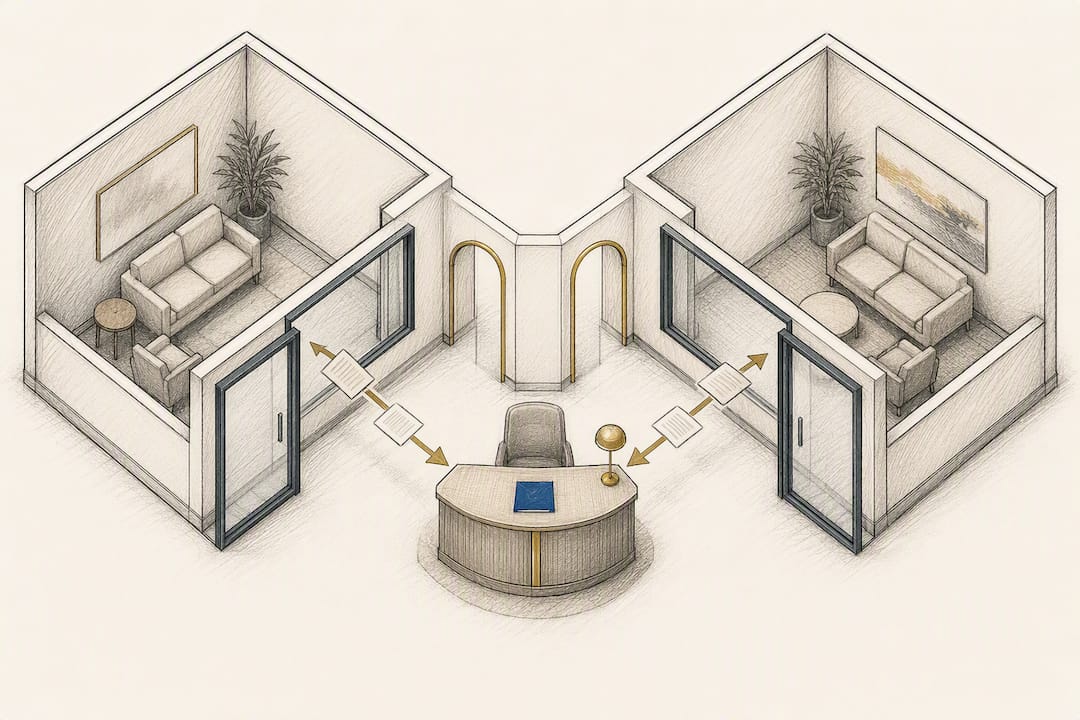
- Shuttle mediation, where you and your spouse stay in separate rooms while the mediator moves between them relaying offers.
Shuttle mediation is the standard choice in high-conflict cases or when there’s a history of intimidation, since it keeps both parties physically separated while negotiations continue. Your attorney can attend and advise you throughout, but they represent only you. The other spouse’s attorney does the same on their side.
Pro Tip: If sitting across the table from your spouse feels like it could derail the conversation, ask your attorney about requesting shuttle mediation before the session is scheduled, not on the day of.
What Should You Bring to Mediation?
Mediation only works when both spouses put real numbers on the table. Walking in with a vague sense of “what we own” instead of documented figures is one of the fastest ways to stall a session or, worse, agree to terms you’ll regret.
Bring:
- Recent pay stubs and the last two to three years of tax returns
- Bank and brokerage account statements
- Retirement plan and pension statements
- Mortgage documents and a full list of outstanding debts
- A written, prioritized list of what matters most to you (custody schedule, specific property, support terms)
Attorneys who prepare clients for mediation consistently point to one pattern: when both spouses bring accurate valuations and transparent paperwork, negotiations shift from arguing over numbers to solving trade-offs, which moves cases toward settlement faster. If your estate includes a business, a pension, or real estate that’s hard to price, loop in a valuation expert before mediation day rather than during it. Reviewing our financial planning guide before filing can help you build that financial picture early.
How Much Does Divorce Mediation Cost in Texas?
Private mediators in Texas typically charge $300 to $600 per hour, with full-day sessions running roughly $1,000 to $2,500 per party. Court-connected dispute resolution centers offer a far cheaper alternative, often on a sliding scale based on income.
- Most counties split the mediator’s fee evenly between both spouses, though some negotiate a different split as part of the process.
- Attorney fees for preparation and attendance add to the total, but mediation still costs a fraction of what a contested trial runs.
- Texas requires a 60 day waiting period from the date of filing before any divorce can become final, regardless of how quickly you and your spouse reach agreement in mediation.
That 60-day clock, set out in Tex. Fam. Code § 6.702, means even a same-day settlement won’t produce a signed decree until the waiting period runs. If cost is a concern, check whether your county runs a low-cost dispute resolution center, like the one Harris County operates, before hiring a private mediator.
How Does a Mediated Agreement Become Binding in Texas?
A Mediated Settlement Agreement isn’t just a handshake deal. Texas law spells out exactly what makes one enforceable, and skipping a requirement can undo months of negotiation.
To be binding, your MSA generally needs:
- A statement, printed in a prominent way, saying the agreement is “not subject to revocation”
- Signatures from both spouses
- Signatures from any attorneys present at the time the agreement was signed
Once those boxes are checked, the agreement typically entitles either party to judgment on its terms, even if one spouse has second thoughts afterward. Your attorney submits the signed MSA to the court, and most judges handle the “prove-up” as a short, procedural hearing rather than a contested one. Because revoking a valid MSA is genuinely difficult, read every line before you sign. Don’t assume you can renegotiate later just because mediation felt informal.
What If There’s a History of Family Violence?
If family violence is part of your history, you have the right to object to mediation, and Texas law protects that choice. File a written objection, and the case cannot be sent to mediation unless a judge holds a hearing and finds the objection isn’t supported by the evidence, under protections outlined in § 153.0071(f) and § 6.602(d).
- Notify your attorney immediately if you have safety concerns about sitting across from your spouse.
- Ask about shuttle mediation, separate waiting areas, or attorney-only attendance as accommodations.
- Document any incidents and consider whether a protective order should be in place before mediation is scheduled at all.
Courts take these objections seriously and will decline to force mediation where safety is genuinely at risk.
What Happens If Mediation Doesn’t Fully Resolve Your Case?
Mediation doesn’t have to be all-or-nothing. If you settle custody but not property, for example, your attorneys can draft a partial MSA covering what you agreed on while the rest heads toward trial.
- Unresolved issues typically move to a temporary orders hearing, continued discovery, and eventually a trial date.
- Statements made during mediation generally stay confidential and can’t be used against you later in court.
- Any partial agreement you reached still stands, so mediation isn’t wasted effort even when it doesn’t settle everything.
What Actually Determines Whether Mediation Works
The biggest predictor of a successful mediation isn’t how amicable you and your spouse are going in. It’s whether you show up with a complete, honest financial picture. Spouses who hide accounts or downplay debts don’t just risk a bad deal for the other side. They risk building an agreement on numbers that don’t hold up, which invites disputes down the road even after the ink is dry.
The accommodations that get overlooked matter too. Shuttle mediation and separate prove-up statements aren’t just for high-conflict cases. They’re strategic tools that let a mediator control the pace of information and pressure-test offers without either spouse feeling cornered. Anna Din’s practice has guided Texas parents and spouses through exactly these moments, tailoring the mediation approach to the specific dynamics of each family rather than treating every case the same way.
— Giri
How Lawofficeofannadin Prepares You for Mediation
Experienced family law attorneys can provide guidance on financial documentation, negotiation priorities, and preparing a Mediation Settlement Agreement with language that meets legal requirements, helping clients avoid learning the statutory requirements after signing.

If custody is part of what’s on the table, our child custody attorney team helps you walk into mediation with a clear position on possession schedules and support. If safety is a concern, we can also discuss protective order options before mediation is ever scheduled. Review real outcomes on our success stories page, then reach out through our divorce attorney page to schedule a consultation and get your mediation preparation started this week.
Statutes and Local Resources Cited
- Tex. Fam. Code § 6.602 and related mediation statutes
- Divorce and Mediation | TexasLawHelp
- Harris County dispute resolution center
This article is general information, not a substitute for advice from a qualified lawyer. Consult a qualified legal professional about your own circumstances before acting on anything here.
Sources
FAQ
How much does divorce mediation typically cost in Texas?
Private mediators generally charge $300 to $600 per hour, with full-day sessions running $1,000 to $2,500 per party, though court-connected centers often charge much less on a sliding scale.
How long does divorce mediation take in Texas?
A single session usually lasts a half day to a full day, though complex property or custody disputes can require multiple sessions spread over several weeks.
What is the 60-day rule in a Texas divorce?
Texas law requires a mandatory 60-day waiting period from the date of filing before any divorce, including one settled through mediation, can become final.
What should you avoid doing during a Texas divorce?
Avoid hiding assets, making major financial moves without your attorney’s input, or agreeing to mediation terms you haven’t reviewed carefully, since a signed MSA is difficult to revoke once both parties and attorneys have signed it.
Recommended
Questions About Your Situation?
Every family is different. Schedule a confidential consultation with Anna Din to discuss your options.
Schedule a Consultation